
Journal
5 Key Milestones in Peptide Research: From Discovery to Advanced Production

5 Key Milestones in Peptide Research: From Discovery to Advanced Production
1. Introduction
The realm of molecular biology and medicine owes an immense debt to the humble peptide. These short chains of amino acids, fundamental building blocks of life, have evolved from obscure biochemical curiosities into powerful therapeutic agents and vital research tools.
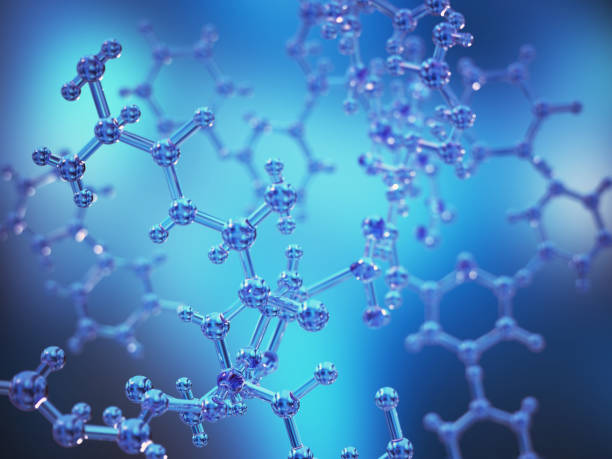
A complex molecular structure showcases numerous interconnected bonds against a calming blue backdrop, symbolizing advances in science and technology.
The journey of peptide research is a compelling narrative of scientific inquiry, technological innovation, and unwavering determination. From the initial isolation of these crucial molecules to the sophisticated, large-scale production methods employed today, the evolution of peptide science has profoundly impacted human health and our understanding of biological processes. This post delves into five pivotal milestones that mark the incredible evolution of peptide research and the manufacturing technologies that bring these vital compounds to our fingertips.
2. The Dawn of Discovery: Early Peptide Research and Isolation
Our understanding of peptides began with laborious efforts to isolate and characterize them from natural sources. Before the advent of sophisticated synthesis techniques, researchers had to painstakingly extract peptides from tissues and fluids. 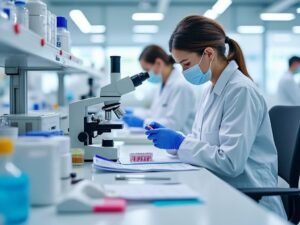 The discovery of secretin in 1902 by Ernest Starling and William Bayliss, a hormone that is a peptide, was a landmark moment. They demonstrated its role in stimulating pancreatic secretions, revealing peptides’ potent biological signaling capabilities. [External Link: Link to a reputable source discussing the discovery of secretin, e.g., a historical medical journal or reputable scientific encyclopedia entry.]
The 1930s saw significant progress in determining the amino acid sequences of peptides. Max Bergmann and Leonidas Zervas developed the carbobenzoxy (Cbz) protecting group, a crucial early tool for peptide sequencing and, later, synthesis. This era laid the groundwork for understanding how the specific order of amino acids dictates a peptide’s function.
Isolation techniques like fractional precipitation, chromatography, and electrophoresis were employed to purify peptides from complex biological mixtures. These techniques, though rudimentary by today’s standards, were revolutionary in their time, allowing scientists to obtain peptides in sufficient purity to study their properties. This foundational period of peptide research was characterized by immense chemical challenges but also by groundbreaking discoveries that hinted at the vast potential of these molecules.
3. The Synthesis Revolution: Solid-Phase Peptide Synthesis (SPPS)
Perhaps the single most transformative milestone in peptide research and production was the invention of Solid-Phase Peptide Synthesis (SPPS) by R. Bruce Merrifield in the mid-1960s, for which he was awarded the Nobel Prize in Chemistry in 1984. [Image: Diagram illustrating the steps of Solid-Phase Peptide Synthesis (SPPS) or a photo of R. Bruce Merrifield.] SPPS revolutionized how peptides could be created, making it significantly faster, more efficient, and automatable.
How SPPS Works:
- Anchoring: The C-terminal amino acid of the desired peptide is covalently attached to an insoluble polymer resin (the “solid support”).
- Sequential Addition: Subsequent amino acids, each with a protected alpha-amino group and activated carboxyl group, are sequentially added to the growing peptide chain.
- Washing: After each coupling step, excess reagents and byproducts are simply washed away from the insoluble resin, simplifying purification compared to solution-phase methods.
- Deprotection: The protecting group on the alpha-amino group of the newly added amino acid is removed, preparing the chain for the next coupling.
- Cleavage: Once the entire sequence is assembled, the peptide is cleaved from the resin, and any remaining side-chain protecting groups are removed.
Impact on Peptide Research:
- Automation: SPPS is highly amenable to automation, leading to the development of peptide synthesizers that can produce peptides with high purity and yield. [Internal Link: Link to a product or service page on your site related to peptide synthesis or custom synthesis.]
- Accessibility: It made a wide range of peptides, previously difficult or impossible to obtain, accessible for study. This dramatically accelerated peptide research across various disciplines, from biochemistry and molecular biology to pharmacology.
- Combinatorial Chemistry: SPPS enabled the rapid synthesis of large libraries of peptides, which proved invaluable for drug discovery efforts, allowing researchers to screen vast numbers of compounds for biological activity. [External Link: Link to a reputable review article on combinatorial chemistry in drug discovery or peptide libraries.]
SPPS truly democratized peptide synthesis, transforming it from a niche expertise into a standard laboratory technique.
4. Therapeutic Breakthroughs: Peptides Enter the Clinic
With improved synthesis and purification methods, peptides began to transition from the research lab into clinical applications. Their inherent biological activity, specificity, and relatively good safety profiles made them attractive candidates for drug development. [Image: Collage of common peptide medications or icons representing different therapeutic areas.]
Key Peptide Therapeutics:
- Insulin: Though discovered much earlier through extraction, its therapeutic use as a treatment for diabetes mellitus was a pioneering example of using a peptide hormone. [Internal Link: Link to a post about diabetes management or the history of medicine.]
- Oxytocin and Vasopressin: These naturally occurring peptide hormones were synthesized and became crucial medications for conditions related to childbirth and fluid balance.
- Gonadotropin-Releasing Hormone (GnRH) Analogs: Synthetic analogs of GnRH, such as leuprolide and goserelin, were developed for treating hormone-sensitive cancers (like prostate and breast cancer) and other endocrine disorders. These analogs often have modified structures to increase stability and potency.
- Glucagon-Like Peptide-1 (GLP-1) Receptor Agonists: Drugs like liraglutide and semaglutide, based on the GLP-1 peptide, have revolutionized the treatment of type 2 diabetes and obesity due to their efficacy in improving glycemic control and promoting weight loss. England Journal of Medicine Overview on GLP-1 Receptor Agonists
The success of these and many other peptide-based drugs validated the therapeutic potential of peptides and fueled further investment and innovation in peptide research and development.
5. Modern Production: Scaling Up for Global Demand
As the therapeutic pipeline for peptides grew, the challenge shifted from making peptides to making enough of them reliably, affordably, and at pharmaceutical-grade purity for a global market. This required advancements in large-scale manufacturing. [Image: Photo of a large-scale peptide synthesizer or a pharmaceutical manufacturing facility.]
Key Advancements in Peptide Production:
- Large-Scale SPPS: SPPS methodologies have been scaled up significantly. While benchtop synthesizers produce milligrams to grams, industrial-scale reactors can generate kilograms or even metric tons of peptides. This involves specialized equipment, optimized reagent delivery, and sophisticated solvent recovery systems. [Internal Link: Link to an about page or services page detailing your company’s production capabilities.]
- Hybrid Synthesis Approaches: For very large peptides or complex structures, hybrid approaches combining SPPS with solution-phase chemistry or enzymatic ligation are often employed to improve efficiency and reduce costs.
- Purification Technologies: High-performance liquid chromatography (HPLC), particularly reverse-phase HPLC (RP-HPLC), has become the workhorse for purifying therapeutic peptides. Advanced techniques and automated systems ensure high throughput and stringent quality control. [External Link: Link to a detailed explanation of RP-HPLC for peptide purification from a chromatography expert or manufacturer.]
- Analytical Characterization: Robust analytical methods (e.g., mass spectrometry, NMR, amino acid analysis, chiral purity assays) are critical to confirm the identity, purity, and quality of pharmaceutical peptides, meeting strict regulatory standards set by bodies like the FDA and EMA. [Internal Link: Link to a glossary or resource defining analytical techniques relevant to peptide analysis.]
- Continuous Manufacturing: The industry is increasingly exploring continuous manufacturing processes for peptides, aiming to improve efficiency, reduce waste, and enhance product consistency compared to traditional batch manufacturing.
These production advancements are crucial for ensuring that life-changing peptide therapies are accessible to patients worldwide. The ongoing evolution in manufacturing directly supports and is driven by advancements in peptide research.
6. The Future of Peptide Research and Manufacturing
The story of peptide research is far from over. The field continues to expand, driven by new insights into peptide biology and further technological leaps in production. [Image: Futuristic or conceptual image related to biotech innovation, AI in science, or advanced drug delivery.]
Emerging Trends:
- Peptide Drug Conjugates (PDCs): Combining peptides with cytotoxic payloads (similar to antibody-drug conjugates) to create highly targeted cancer therapies.
- Peptides for Regenerative Medicine: Exploring peptides that can stimulate tissue repair and regeneration.
- Oral Peptide Delivery: Overcoming the challenge of peptide degradation in the gastrointestinal tract to enable oral administration, which would be a significant patient convenience. [External Link: Link to a research paper or review on oral peptide delivery challenges and innovations.]
- AI and Machine Learning: Artificial intelligence is being used to predict peptide structure-activity relationships, design novel peptide sequences, and optimize synthesis and manufacturing processes. [Internal Link: Link to a post discussing AI’s role in scientific discovery or drug development.]
- Green Chemistry in Synthesis: Developing more environmentally friendly synthesis methods, reducing solvent usage and waste generation.
- Microfluidics and Miniaturization: For research and diagnostics, microfluidic platforms offer precise control and rapid synthesis of small quantities of peptides.
These innovations promise to unlock even greater therapeutic potential and expand the applications of peptides across medicine and biotechnology.
7. Conclusion
The journey from the initial isolation of a few signaling peptides to the widespread therapeutic use of complex peptide drugs is a testament to relentless scientific pursuit. [Image: A concluding image that summarizes progress, perhaps a timeline graphic or a symbolic representation of scientific advancement.] The evolution of peptide research, propelled by innovations like Solid-Phase Peptide Synthesis and sophisticated manufacturing techniques, has transformed our ability to harness the power of these fundamental biomolecules. As we look to the future, continued advancements in both research and production promise to deliver even more targeted, effective, and accessible peptide-based solutions, further solidifying their indispensable role in modern medicine.