
Journal
How to Buy Peptides Online Safely: A Complete Guide

How to Buy Peptides Online Safely: A Complete Guide
Key takeaways
- Before you buy peptides online, confirm the vendor publishes a lot-specific Certificate of Analysis from an accredited third-party lab.
- A Certificate of Analysis is only meaningful when it matches the exact batch number printed on the vial you receive.
- Federal regulators have taken action against online peptide sellers, so a ‘research use only’ label does not guarantee a product is safe or legal to use.
- Peptides are temperature sensitive, so cold-chain shipping and cold storage on arrival protect potency.
- Compare vendors on transparency and testing evidence, not just price, because the cheapest option often skips verification.
The safest way to purchase peptides online is to buy only from vendors who publish a lot-specific Certificate of Analysis from an accredited third-party laboratory and who ship with proper cold-chain handling. Everything else in your decision, including price, brand reputation, and convenience, should sit beneath that verification standard, because a product you cannot verify is a product you cannot trust.
This guide walks through what to check before you pay, how to read purity and testing claims, how to compare vendors on real value, and how shipping and storage affect what actually arrives at your door.

What to Verify Before You Buy Peptides Online
Peptides are precise molecules, and small differences in purity or handling change what you receive. Before you enter payment details anywhere, confirm a short list of basics.
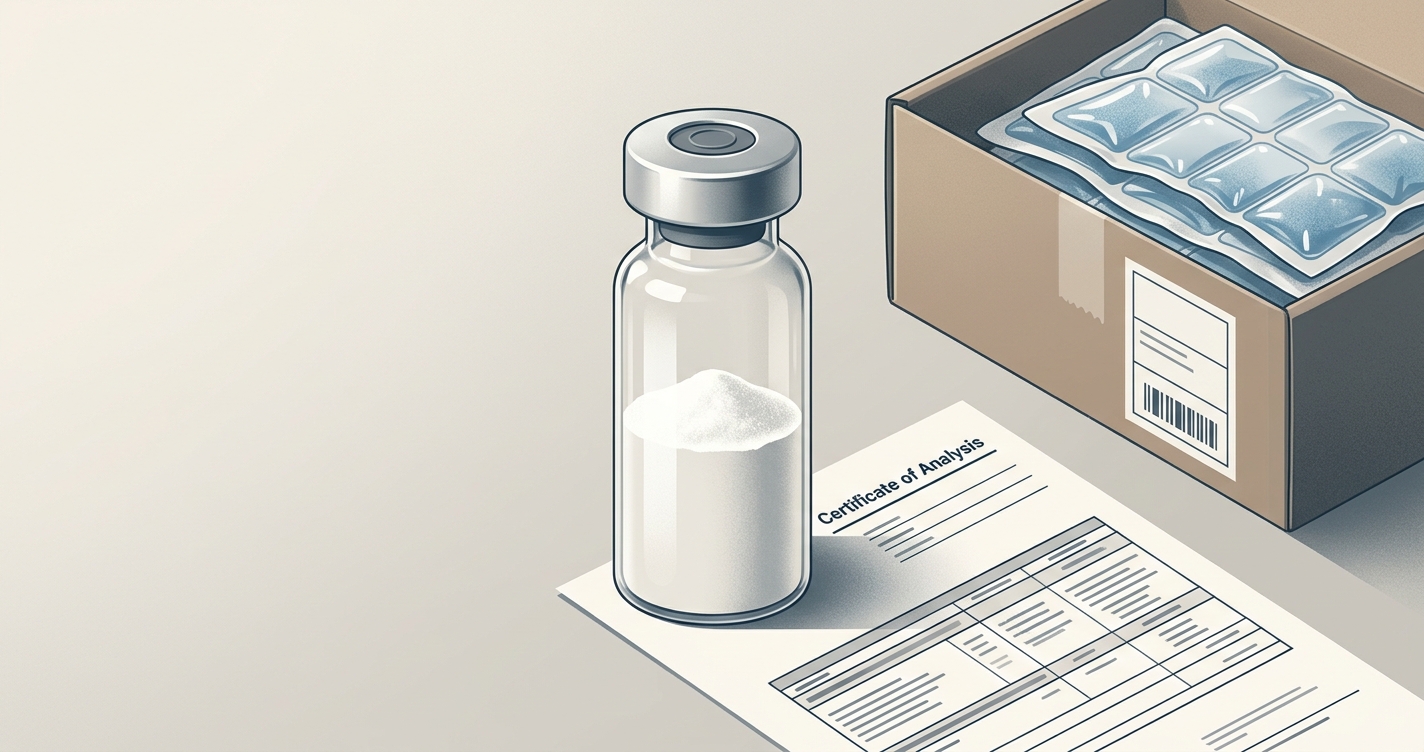
- A lot-specific Certificate of Analysis (COA). The vendor should provide test results tied to the exact batch you are buying, not a generic sample from months ago.
- An identifiable seller. A physical address, a working support channel, and a real company name matter. Anonymous storefronts are a warning sign.
- Clear labeling. The product name, quantity, batch number, and storage instructions should be stated plainly.
- Honest claims. Vendors that promise dramatic results or imply medical benefits are stepping outside what any responsible supplier should say.
Regulatory risk is real here. In December 2024, the U.S. Food and Drug Administration issued a warning letter to Summit Research Peptides for selling products such as semaglutide and tirzepatide as unapproved new drugs, and the letter made clear that a “research use only” disclaimer did not exempt the seller from the law. You can read the FDA warning letter directly. The lesson for buyers is straightforward: a label on a website tells you far less than an accredited lab report does.
Purity, Third-Party Testing, and Sourcing Red Flags
Purity is the whole game with peptides. A vial labeled with a compound is only as good as the evidence behind it, and independent testing is that evidence.
How to read a Certificate of Analysis
A useful COA typically shows two things. High-performance liquid chromatography (HPLC) reports purity as a percentage, and mass spectrometry confirms the molecule is what the label says. Look for a purity figure, the testing lab’s name, and a batch number that matches your vial. If the batch numbers do not match, the report tells you nothing about the product in your hand.
Third-party testing carries more weight than in-house testing because the lab has no stake in the outcome. Accreditation to a standard such as ISO/IEC 17025 signals that the lab follows recognized methods.
Sourcing red flags to walk away from
- No COA, or a COA with no batch number.
- A single COA reused across every product on the site.
- Refusal to answer questions about the manufacturing source.
- Prices far below every competitor, which often signals skipped testing or diluted product.
- Marketing that leans on hype instead of documentation.
Contamination is not a hypothetical concern. A peer-reviewed analysis published in Frontiers in Sports and Active Living reported that “14 to 50% of samples analyzed from dietary supplement products have tested positive for anabolic agents or other prohibited substances,” which shows how often what is on the label fails to match what is in the bottle across the broader supplement market. You can review the Frontiers study for the full context. That gap is exactly what third-party testing exists to close.
Comparing Online Peptide Vendors and Value
Once you have narrowed the field to vendors who test their products, you can compare them on value. Value is not the same as the lowest sticker price. A cheaper vial that arrives degraded or untested costs more in practice than a verified one.
When comparing vendors, weigh these factors together:
- Testing transparency. Are COAs published openly, or do you have to request them and hope?
- Batch traceability. Can you match the report to the vial?
- Consistency. Does the vendor test every batch, or only occasionally?
- Handling standards. Does the vendor describe how products are shipped and stored?
- Support and returns. Is there a clear policy if something arrives wrong?
A simple way to score vendors is to give the most weight to verifiable evidence and the least weight to marketing language. Two vendors may quote similar prices, but the one that shows you a current, matching COA and explains its cold-chain process is offering more for your money even before you factor in peace of mind.
Shipping, Storage, and Freshness Considerations
A verified peptide can still arrive compromised if it is shipped and stored badly. These molecules are sensitive to heat, light, and time, so handling is part of quality, not an afterthought.
Shipping. Reputable vendors ship lyophilized (freeze-dried) peptides with cold packs or insulated packaging, especially in warm months. Ask how a vendor handles summer shipping before you order. A product that sits in a hot mailbox for days may lose potency regardless of how pure it started.
Storage on arrival. General practice is to keep lyophilized peptides frozen for long-term storage and to refrigerate them for shorter periods. Once reconstituted with bacteriostatic water, peptides are usually kept refrigerated and used within a limited window, since a peptide in solution degrades faster than a dry one.
Freshness signals. Check the manufacture or test date on the COA. A recent batch handled correctly is worth more than an older one at a discount. If a vendor cannot tell you when a batch was produced or tested, treat that as a gap in their process.
Why Nova Lean’s Peptide Formulations Stand Out
For readers who want the verification standards above without auditing every vendor themselves, Nova Lean Wellness builds its peptide formulations around the same checkpoints this guide recommends. That means batch-level testing evidence, clear labeling, and handling practices designed to protect potency from the lab to your door.
The value of that approach is practical. When a supplier already publishes matching Certificates of Analysis and ships with the cold and light protections peptides need, you spend less time cross-checking and more time confident in what you have. Nova Lean positions its formulations for people pursuing serious wellness and performance goals, where the difference between a verified product and an unverified one is not academic.
None of this replaces your own diligence. Use the checklist in this guide on any vendor you consider, including this one, and let the documentation earn your trust.
A Concrete Next Step
Before your next purchase, open the product page you are considering and try to find a lot-specific Certificate of Analysis from an accredited third-party lab that matches a batch number. If you can find it, read it. If you cannot find it within a few minutes, close the tab and move to a vendor who makes that evidence easy to see. That single habit filters out most of the risk in buying peptides online.
Frequently asked questions
Is it legal to buy peptides online?
The legal status depends on the specific peptide and how it is marketed. Many peptides are sold for research use, and regulators have issued warning letters to sellers who market them for human use without approval. Check current regulations and consult a qualified professional before buying.
How do I know if an online peptide vendor is legitimate?
Look for a lot-specific Certificate of Analysis from an accredited third-party laboratory, clear contact information, transparent sourcing, and cold-chain shipping. Vendors that hide test results or make exaggerated health claims are higher risk.
What does a Certificate of Analysis actually tell me?
A Certificate of Analysis reports the identity and purity of a specific batch, usually including mass spectrometry and HPLC results. It confirms what is in that lot, so it must match the batch number on the vial you receive.
How should peptides be shipped and stored?
Most peptides degrade with heat and light. Reputable vendors ship with cold packs, and you should store lyophilized peptides in a freezer and reconstituted peptides refrigerated, using them within the recommended window.