
Journal
Peptides for Sale: Smart Shopping for Purity & Value

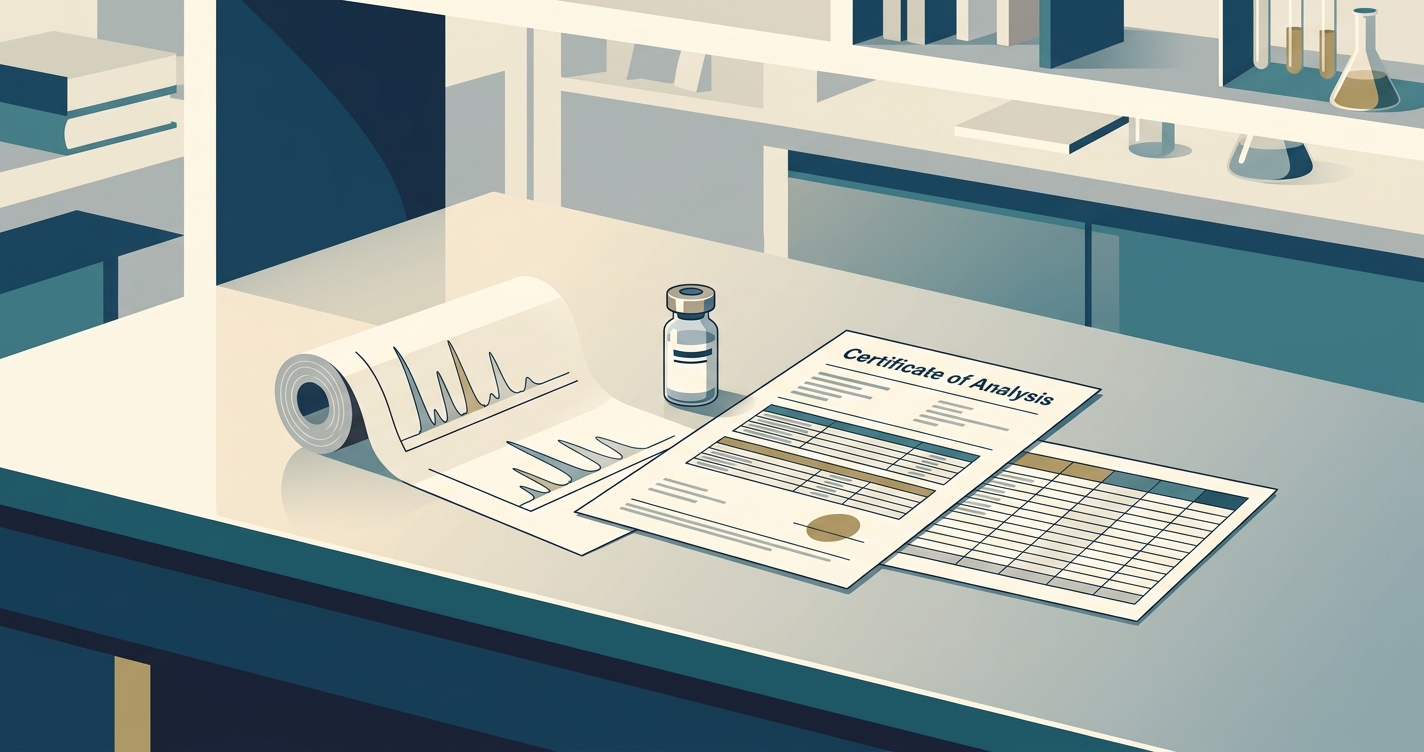
Peptides for Sale: Smart Shopping for Purity & Value
Key takeaways
- Research-grade peptides are judged on HPLC purity, with 98% treated as the working standard and 99% reserved for critical use.
- A batch-specific Certificate of Analysis with an HPLC chromatogram and mass spectrometry identity check is the single best signal of quality.
- The FDA does not approve supplements before sale, so third-party testing carries the burden of proof for purity and safety.
- The lowest sticker price often hides the highest real cost once you account for impurities, mislabeling, and wasted product.
The smartest way to shop for peptides is to buy on verified purity and transparent lab data, never on price alone. A vial that lists 99% HPLC purity and ships with a batch-specific Certificate of Analysis is worth far more than a cheaper one with no documentation behind it.
That gap between sticker price and real value is where most buyers get burned. This guide walks through what actually drives peptide quality, how to confirm purity yourself, and how to compare vendors so your money buys the compound on the label and nothing else.
Key Takeaways
- Research-grade peptides are judged on HPLC purity, with 98% treated as the working standard and 99% reserved for critical use.
- A batch-specific Certificate of Analysis is the strongest quality signal you can ask for.
- The FDA does not approve supplements before sale, so third-party testing carries the burden of proof.
- The lowest sticker price often hides the highest real cost once impurities and mislabeling are counted.
What Drives Peptide Quality and Price?
Peptide quality comes down to purity, identity, and the manufacturing controls behind them, and each of those raises production cost. The peptide therapeutics market has grown into a multi-billion-dollar global industry, and rapid demand pulls in both careful manufacturers and opportunists. Price alone tells you very little about which camp a seller belongs to.
Synthesis is the first cost driver. Making a peptide involves building an amino acid chain step by step, and every step can leave behind truncated or modified fragments. Cleaning those out through purification takes time, equipment, and skilled chemists. A supplier who skips thorough purification saves money and passes a cheaper, dirtier product to you.
Testing is the second driver. High-performance liquid chromatography (HPLC), mass spectrometry, and endotoxin screening all cost money per batch. Vendors who run this full panel and publish it charge more because they are paying for proof. Vendors who quote a suspiciously low price are often the ones who quietly cut the testing budget first.
Storage and handling round out the picture. Peptides are fragile and degrade with heat, light, and moisture. A quality vendor invests in cold-chain shipping and proper storage, which protects the compound you paid for. For a broader look at the factors that separate a good purchase from a regret, see Buy Peptide Supplements: What to Know Before You Buy.
How Do You Verify Purity and Third-Party Testing?
You verify purity by reading a batch-specific Certificate of Analysis (COA), not by trusting a marketing claim. Research-grade peptides are held to at least 98% HPLC purity as the working standard, with 95% as the minimum acceptable and 99% reserved for critical work. That number only means something when a real lab report backs it up.
Start with the HPLC result. A good COA shows the actual chromatogram, a graph with a clean dominant peak, not just a printed percentage. The peak tells you how much of the UV-absorbing material is your target compound. The small remainder is usually truncation sequences or oxidized variants that slipped through purification.
Then confirm identity. HPLC tells you how pure a sample is, but it does not prove the vial holds the peptide you ordered. Mass spectrometry does that job by matching molecular weight. A COA with HPLC purity and mass spec identity together is the pairing you want to see.
Three checks separate a trustworthy report from a decorative one:
- The COA is batch-specific and its lot number matches your vial label, not a generic product spec.
- The testing lab is independent and, ideally, ISO 17025 accredited.
- Injectable-grade material lists endotoxin levels, typically under 5 EU/mg.
Third-party testing matters because no government agency does it for you before sale. The U.S. FDA states plainly that it does not approve dietary supplements for safety and effectiveness before they reach the market. That regulatory gap is exactly why an independent COA carries the burden of proof.
Avoiding Low-Grade or Mislabeled Products
Mislabeling is common enough that you should assume nothing until the paperwork proves it. In one review of 50 studies covering more than 3,000 products, 28% of uncertified supplements contained undeclared drugs capable of triggering an inadvertent positive drug test (BSCG, 2024). When a product carries no independent testing, you are exposed to that same risk.
Contamination is the quieter danger. HPLC can report 99% purity and still miss bacterial endotoxins or heavy metals, because it only measures UV-absorbing organic material. That is why a purity number by itself is never enough. You want a report that also screens for the contaminants HPLC cannot see.
The scope of the problem shows up across the wider supplement shelf. The same BSCG review noted that 47% of tested protein powders exceeded California Proposition 65 safety thresholds for toxic heavy metals (BSCG, 2024). Peptides sit in the same loosely policed market, so the same caution applies.
Watch for these red flags before you check out:
- No COA available, or a generic COA that does not match a specific batch.
- Prices dramatically below every reputable competitor with no explanation.
- Vague label language, missing lot numbers, or no listed testing lab.
- A vendor who cannot answer basic questions about storage and endotoxin testing.
When a seller treats documentation as optional, walk away. For a step-by-step routine that keeps you safe through the whole purchase, our complete guide to buying peptides online safely breaks the process into checks you can run in minutes.

Comparing Value Across Trusted Vendors
Value is purity and proof per dollar, so compare vendors on documentation first and price second. Two vials at the same price can differ wildly once you factor in what each one actually delivers. The cheaper option is only cheaper if the compound inside matches the label.
Build a simple comparison. For each vendor, note the stated HPLC purity, whether a batch-specific COA exists, whether mass spectrometry identity is included, and whether endotoxin data appears for injectables. A vendor who checks every box at a slightly higher price usually wins on real cost.
Ask what happens after the sale, too. Responsive support, clear storage guidance, and consistent batch-to-batch results are part of the value you are buying. A vendor who answers technical questions directly is signaling that they have nothing to hide in the lab data.
Run the math on waste. A 60% purity peptide at half price is not a bargain, because a large share of what you paid for is not the compound you wanted. Adjusting price for verified purity often flips the ranking, and the “expensive” vendor turns out cheaper per usable unit.
Why Nova Lean’s Peptides Are Worth It
Nova Lean Wellness earns its price by treating documentation and purity as the product, not an afterthought. Every reputable purchase should come with a batch-specific COA, and buyers who insist on that standard filter out most of the market’s low-grade options before spending a dollar.
That standard is the whole point of shopping smart. When you can see the chromatogram, confirm identity through mass spectrometry, and check endotoxin results against the lot number on your vial, you are buying certainty. Nova Lean Wellness positions its peptide formulations for people who want that certainty rather than a gamble on an anonymous cheaper vial.
To judge whether a peptide is worth its price, confirm that the compound on the label is the compound in the vial, verified by an independent lab you can check. Pay for that proof, and the higher upfront number quietly becomes the lower real cost over time.
Before your next order, ask the vendor for a batch-specific COA and confirm three things on it: an HPLC chromatogram at 98% or higher, a mass spectrometry identity match, and a lot number that matches the vial. If any of the three is missing, keep shopping until you find a seller who can produce all three.
Frequently asked questions
What HPLC purity should I look for when buying peptides?
Aim for at least 98% HPLC purity, which is the working benchmark for research-grade material. A minimum of 95% is acceptable for routine use, while 99% is preferred for critical applications.
Why does a Certificate of Analysis matter so much?
A batch-specific COA ties the vial in your hand to actual test data. It should include an HPLC chromatogram, mass spectrometry identity confirmation, and endotoxin results, not just a single purity number on a generic spec sheet.
Does the FDA test peptides before they are sold?
No. Under U.S. law, dietary supplements are regulated as food and receive no pre-market FDA approval. Manufacturers are responsible for safety and labeling, which is why independent third-party testing is essential.
Is the cheapest peptide vendor usually the best value?
Rarely. A low price frequently reflects lower purity, missing test data, or mislabeled content. Real value comes from verified purity and transparent documentation, not the smallest number on the checkout page.