

Journal
Premium Research Peptides: Purity Standards Explained

Key takeaways
- A premium research peptide is defined by verified purity, confirmed molecular identity, and documentation you can actually read, not by marketing claims.
- HPLC measures relative purity while mass spectrometry confirms identity, so a real certificate of analysis includes both tests.
- The global peptide therapeutics market reached USD 46.4 billion in 2024 and is projected to hit USD 100 billion by 2034, raising the stakes for quality (Global Market Insights).
- Storage matters: temperature, moisture, and light degrade peptides over time, so handling instructions are part of quality, not an afterthought.
A premium research peptide is one whose purity and molecular identity are verified by laboratory testing and backed by documentation you can inspect. The word "premium" only means something when a certificate of analysis, real test data, and clear handling instructions stand behind it. This guide explains the standards that separate genuinely high-quality material from products that simply look the part.
Key Takeaways
Purity, confirmed identity, and readable documentation define a premium peptide.
HPLC measures relative purity; mass spectrometry confirms molecular identity.
The peptide therapeutics market reached USD 46.4 billion in 2024 (Global Market Insights).
Storage and handling protect potency and belong in any quality conversation.
What Defines a Premium Research Peptide?
Demand for peptides is rising fast, which makes quality harder to judge by price alone. In 2024, the global peptide therapeutics market reached USD 46.4 billion, and Global Market Insights projects it will grow from USD 49.7 billion in 2025 to roughly USD 100 billion by 2034 at an 8.1% compound annual growth rate (Global Market Insights, 2025). A larger market means more suppliers, and more suppliers means more variation in what "premium" actually delivers.
A premium research peptide rests on three pillars. First, verified purity: the target compound makes up the vast majority of the sample, with impurities measured rather than assumed. Second, confirmed identity: the molecule is the exact sequence and structure it claims to be. Third, documentation: the buyer can read the test results for the specific batch, not a generic marketing sheet.
Notice that none of these pillars is a slogan. Words like "ultra-pure" or "pharmaceutical grade" carry no fixed legal meaning in the research supply chain. The evidence lives in the data, and the data comes from testing. If a supplier cannot show you the numbers for the lot you are buying, the label is doing all the work.
Which Manufacturing and Testing Standards Actually Matter?
The standards that matter are the ones tied to independent measurement: high-performance liquid chromatography for purity, mass spectrometry for identity, and accredited laboratory practices behind both. Testing, not the manufacturing brochure, is what turns a claim into a verified fact.
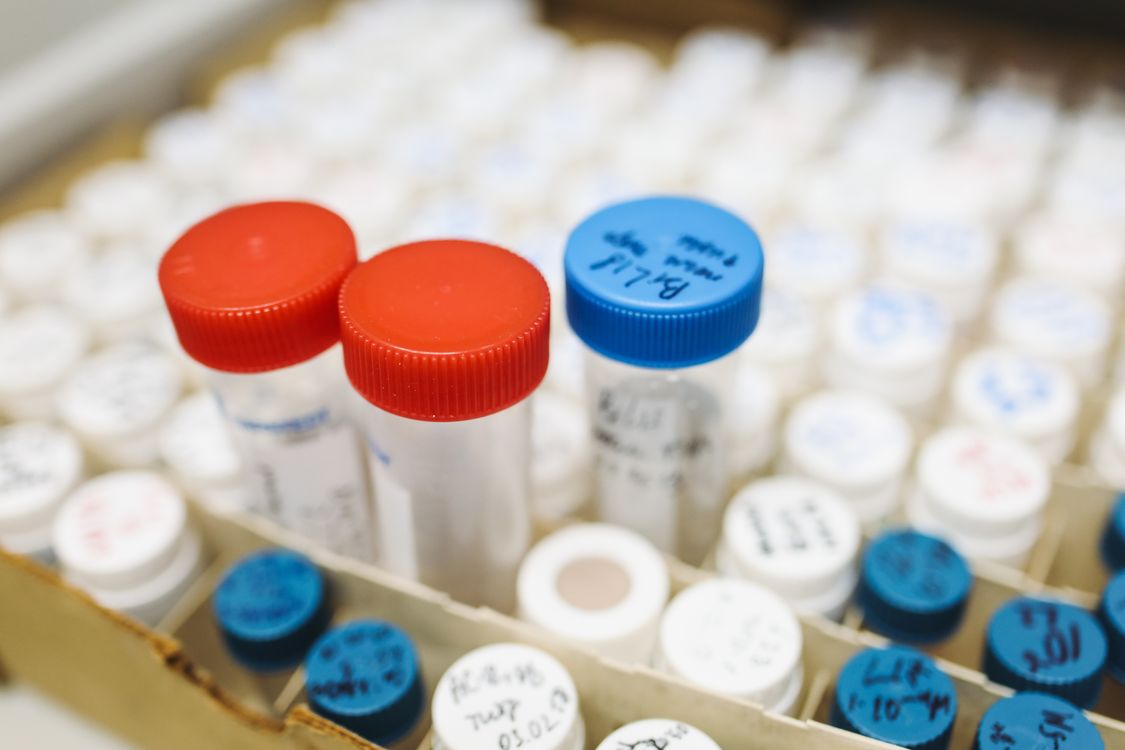
High-performance liquid chromatography, or HPLC, separates a sample into its component parts. Purity is reported as the area of the target peak divided by the total area of all peaks. A high HPLC figure tells you the main compound dominates the sample and that byproducts from synthesis are minimal. That is important, but it has a well-known limit: HPLC shows how much, not what. It does not confirm that the main peak is the molecule you actually ordered.
That is where mass spectrometry comes in. By measuring molecular weight, mass spectrometry verifies that the compound matches the expected sequence and structure. A sample can be highly pure and still be the wrong molecule, so serious testing pairs the two methods and reports both results.
Laboratory competence underpins everything. Accredited labs operating under recognized quality systems produce results you can trust, because their methods, calibration, and record-keeping are audited by outside bodies. When a supplier tests in-house with no external accreditation and no third-party check, you are trusting the seller to grade its own homework.
How Do You Read a Purity Certificate and Analysis Report?
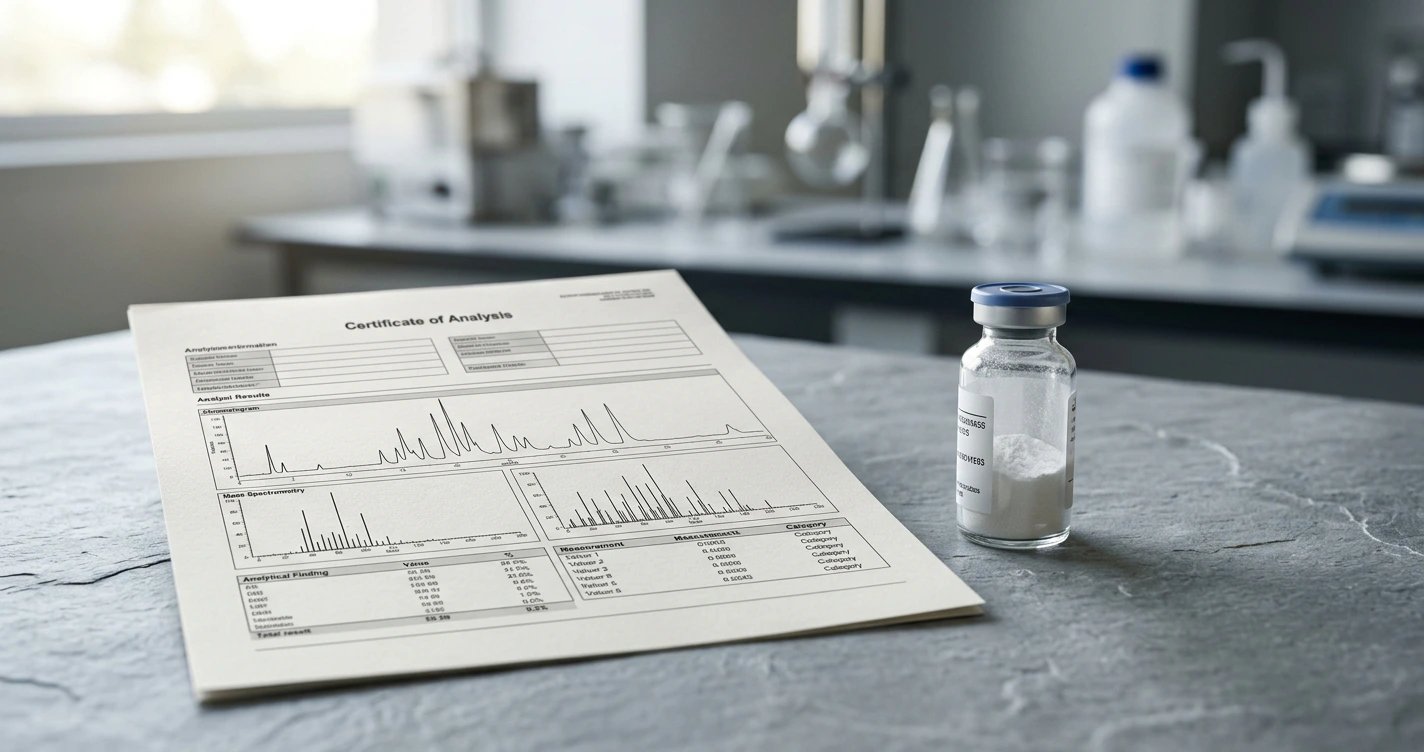
A certificate of analysis (COA) is a batch-specific document that lists the test methods and results for a single lot. Read it as a record tied to the exact vial you are buying, and be skeptical when the numbers look too tidy to be real measurements.
Start by confirming the COA matches your specific batch or lot number. A COA for a different lot tells you nothing about the product in front of you. Then look for both purity and identity data. A complete report typically shows an HPLC chromatogram with a purity percentage and a mass spectrometry result confirming molecular weight. Some reports add appearance, net peptide content, and sequence confirmation.
Watch for statistical red flags. Real laboratory measurements produce specific, uneven numbers such as 98.47% or 99.12%. A supplier reporting exactly 99.00% on every batch, forever, is reporting a marketing target rather than a measurement, because genuine testing varies from lot to lot. Consistency that never wavers is itself a warning sign.
Independent verification adds another layer of confidence. Third-party testing, where a lab with no stake in the sale runs the analysis, removes the conflict of interest baked into in-house-only reporting. If you are comparing suppliers, our guide to smart shopping for peptide purity and value walks through how to weigh documentation against price.
Why Do Storage and Handling Determine Potency?
Storage and handling determine how much of the verified purity survives to the moment of use. A peptide can leave the lab at a high purity and still degrade in transit or on a shelf if temperature, moisture, and light are not controlled. Documentation of purity is only meaningful if the product is kept in the condition that data describes.

Most research peptides ship as a lyophilized, or freeze-dried, powder. In this dry form they are relatively stable, but they still respond to their environment. Heat accelerates breakdown, moisture invites degradation, and repeated exposure to light can damage sensitive sequences. Cold, dry, dark storage is the general rule for keeping dry peptides intact.
Reconstituted peptides are a different story. Once a powder is dissolved, the molecule becomes far more fragile and its usable life shortens considerably. This is why handling guidance covers not just the unopened vial but what happens after it is prepared. A quality-focused supplier treats storage instructions as part of the product, not fine print.
Handling failures can quietly undo everything the COA promised. If a peptide arrives warm because it was shipped without cold packing, the purity report describes a product that no longer exists in the same state. Chain-of-custody care, from the lab to your door, is a legitimate part of the quality equation.
How Does Nova Lean Ensure Elite Quality?
Nova Lean Wellness anchors quality to the same three pillars that define a premium peptide: verified purity, confirmed identity, and documentation the buyer can actually review. The goal is to make quality checkable rather than a claim you have to take on faith.
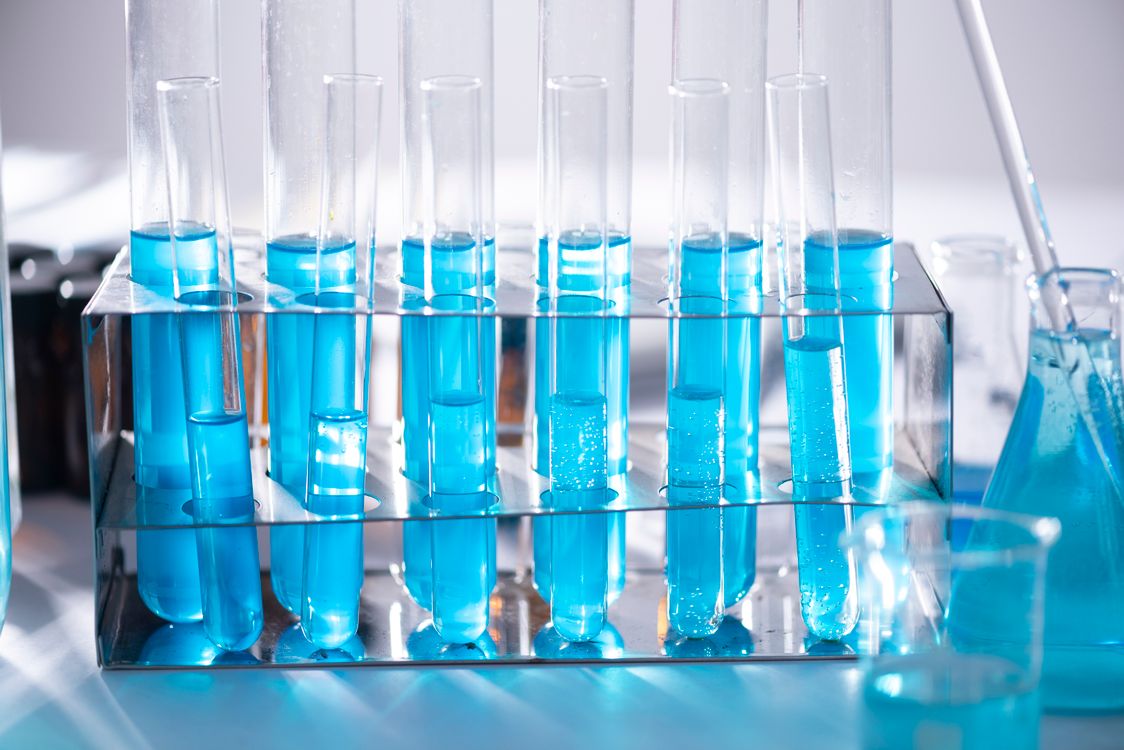
That means treating batch-specific test data, paired HPLC and mass spectrometry results, and clear storage guidance as standard expectations rather than premium extras. It also means being straightforward about what the documentation shows, so that customers can compare like for like instead of comparing adjectives on a label. You can read more about that approach in the Nova Lean Wellness story.
The practical takeaway for any buyer is simple. Ask for the certificate of analysis for the exact batch. Confirm it includes both a purity measurement and an identity confirmation. Check that the numbers look like real measurements, and read the storage instructions before the product ever arrives. A supplier that welcomes those questions is one worth trusting.
Your next step is to request the COA for the specific product and batch you are considering, then verify it shows both HPLC purity and mass spectrometry identity before you commit. That single habit does more to protect your results than any label ever will.
Frequently asked questions
What purity percentage should a research peptide have?
Most research applications call for high-purity material verified by HPLC, with the exact target set against the certificate of analysis for that specific batch. Always match the reported figure to the intended use rather than trusting a round marketing number.
Does HPLC confirm a peptide is the correct molecule?
No. HPLC measures how much of the sample is the main compound relative to impurities, but it does not confirm identity. Mass spectrometry verifies the molecular weight, which is why a complete report includes both.
What is a certificate of analysis for a peptide?
A certificate of analysis is a batch-specific document showing the test methods and results for a given lot, including purity, identity, and sometimes appearance and sequence. It ties the vial in your hand to the lab data behind it.
How should research peptides be stored?
Lyophilized peptides are generally kept cold and away from moisture and light, while reconstituted peptides are more fragile and shorter-lived. Follow the specific storage and handling guidance provided with the product to protect potency.




One thought on “Premium Research Peptides: Purity Standards Explained”